CORAL REEF DRAMA c.o. 2009
The emotions poster
What do you think of when you look at this poster?
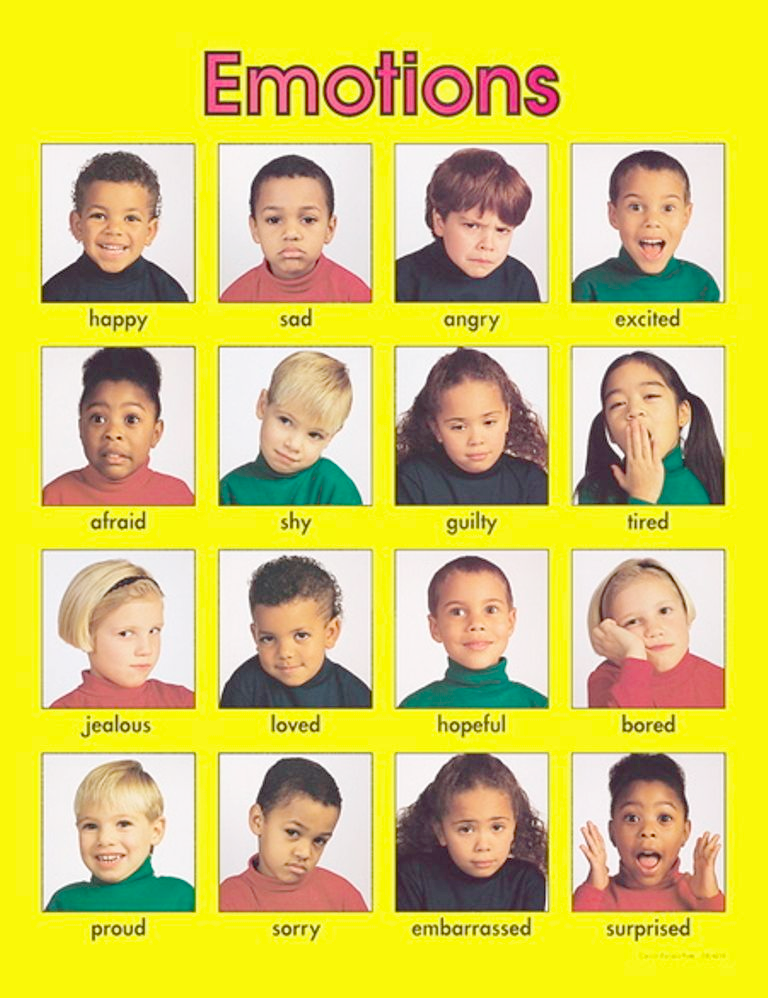
It's a children's poster of emotions. Where could you imagine seeing something like this? Hanging in a kindergarten classroom? At a children's therapist's office? In a baby's nursery of some kind?
How about in a high school theater magnet's black box performance space?
This poster was tacked up in the corner of our black box for all four years of school. I first saw it during my audition, and I actually remember thinking how clever and playful it was. Clearly, it was a joke: our teacher, Ms. Mxdxxxx, was making fun of how the rest of the (non-theater) world perceived emotions. They saw “happy” and “sad” as simple smiling and frowning, whereas we actors knew that complex emotions would never be reduced to such shallow depictions. I imagined the lessons she might teach with this in mind, reminding her students to focus on the objective and to not lapse into merely making faces like those. I liked how she didn't draw attention to the poster, either. It was a little easter egg for curious students, and I appreciated it.
Except. . . it wasn't joke. The poster was not ironic. It wasn't a parody of how others might see feelings. Mxdxxxx genuinely believed that these faces were how actors were supposed to depict emotions.
According to her methods, you go onstage, figure out if your character is happy, sad, or angry, and then just “behave” in ways that fit the emotion. Smile if you're happy. Frown if you're sad. Raise your hands to the side of your face with your mouth open if you're surprised.
Funnily enough, this shortsighted, embarrassing interpretation of acting was more of a “lesson” than anything she actually taught.
In many ways, I actually consider this throwaway infraction to be one of the worst offenses of the entire drama program. One can argue about circumstances and logistics when it comes to the mounting of shows or teaching of different lessons. It can be difficult to prove intent or feelings when it comes to what teachers did or did not do, and even money often clouds decision-making. But this is different: without any trace of irony, our drama teacher thought a colorful poster of emotions suitable for a baby's nursery was somehow a fitting piece of educational material to teach high schoolers how to act professionally. ❒